Captain Alex Saunders
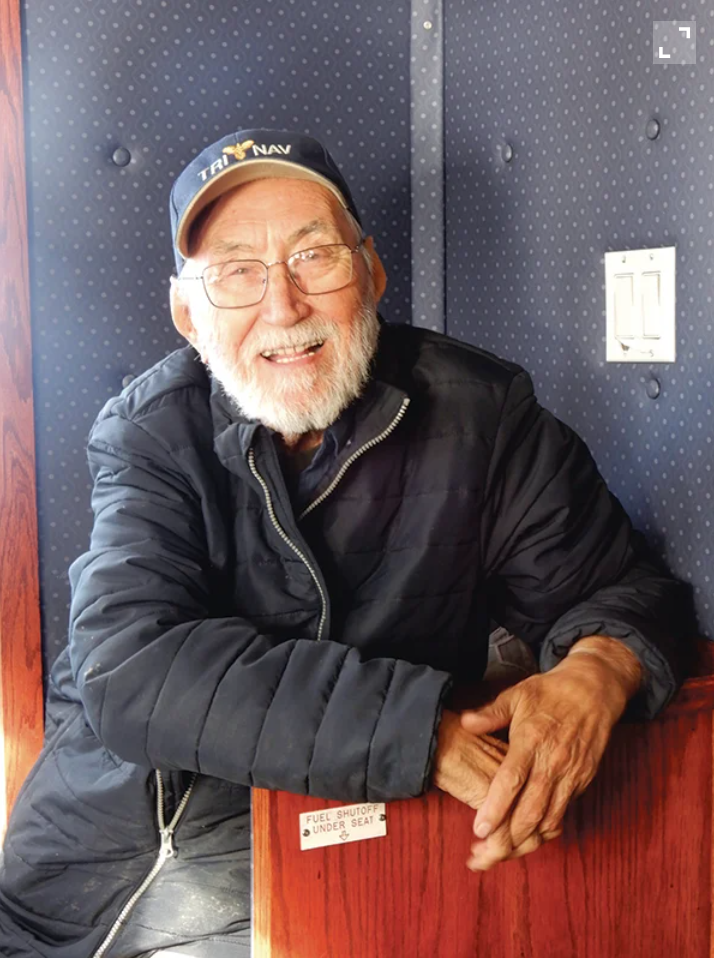
1 media/Screenshot 2026-04-07 154744_thumb.png 2026-04-07T19:48:30+00:00 Alicia Primiani 735b8f2770589453a18b72ce6038011f215fb41c 16 1 Captain Alex Saunders pictured in September 2021. (Photo: Jenn Thornhill Verma) plain 2026-04-07T19:48:30+00:00 Alicia Primiani 735b8f2770589453a18b72ce6038011f215fb41cThis page is referenced by:
-
1
media/Abandoned boat.png
2026-03-22T18:08:20+00:00
Chapter 2: Collapse and Challenge
14
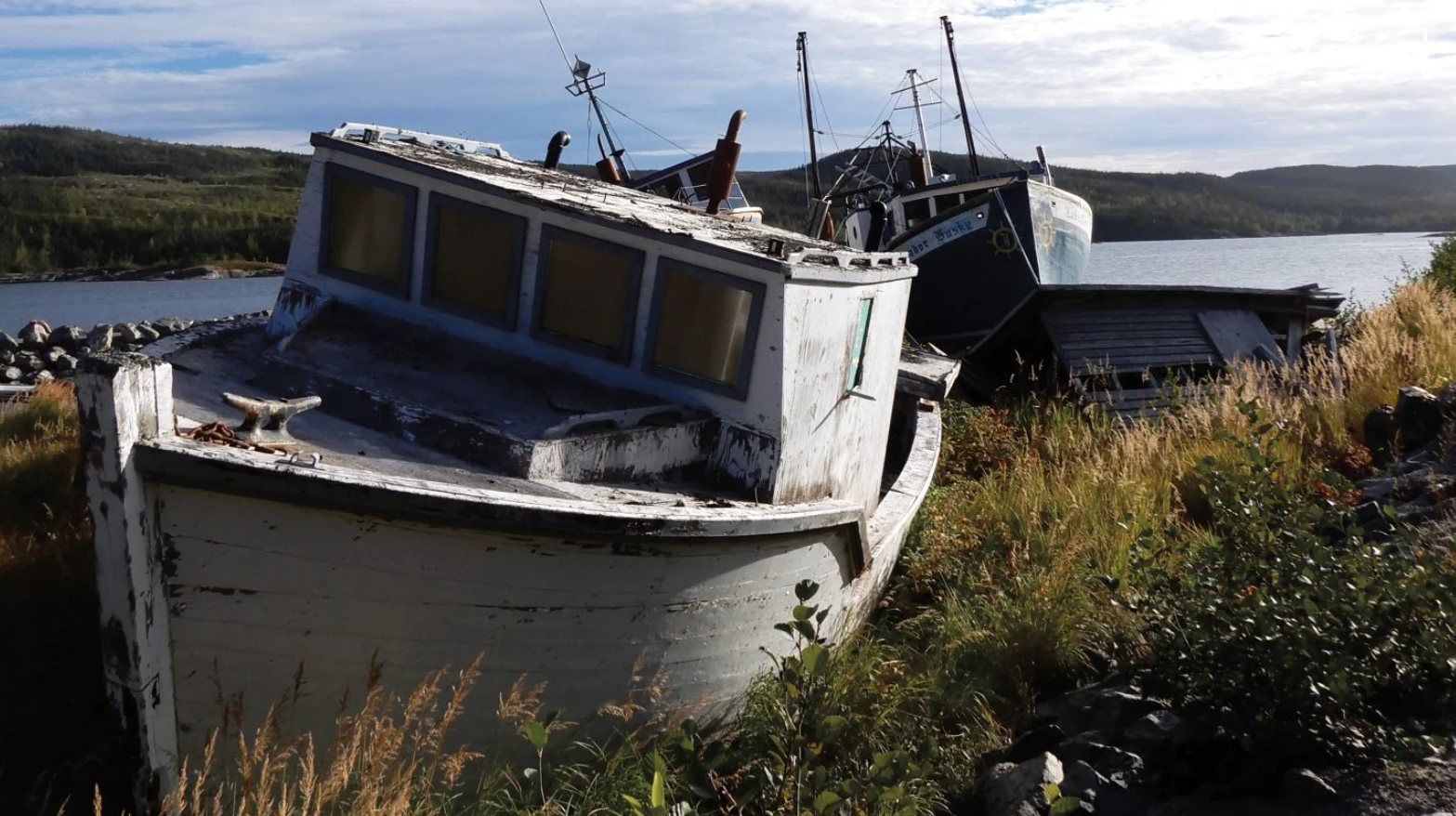
The 1992 cod fishery collapse and its effects: depopulation, loss of local jobs, and community disruption.
image_header
2026-04-07T20:45:51+00:00
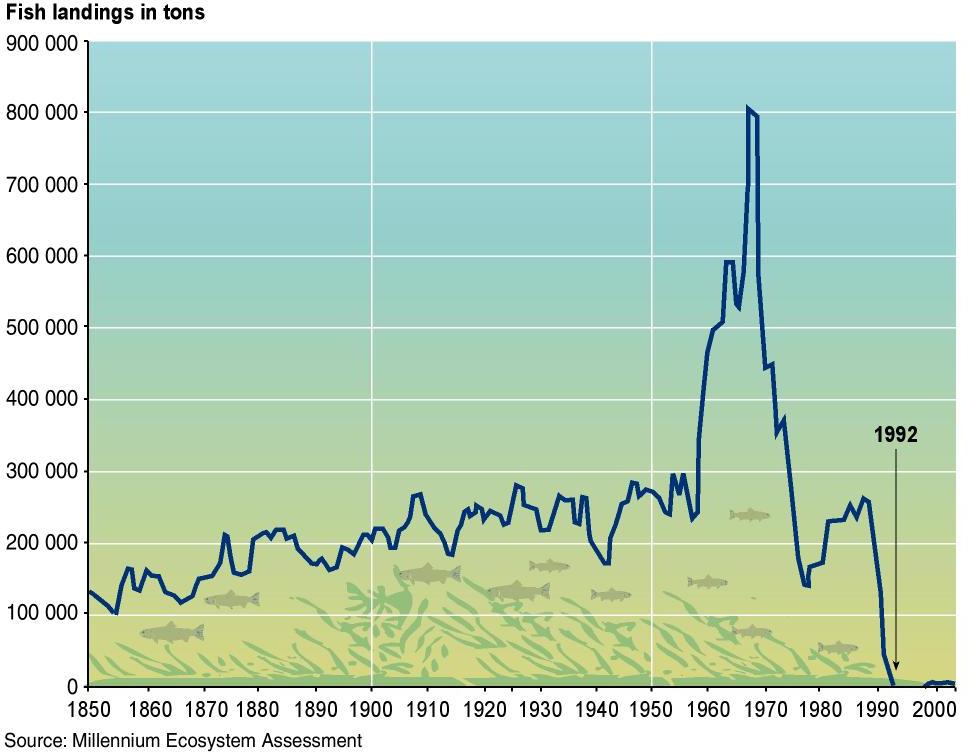
Fogo Island thrived for a long time, until the collapse of the cod fishery in 1992 changed everything. This was one of the most significant economic crises Newfoundland and Labrador has experienced, and it created major shifts in lifestyle. For centuries, cod fishing was the foundation for these coastal communities, and they heavily relied on the fishing industry to live and survive. Yet, overfishing, consumption, and the use of more industrial tools caused cod stocks to decline drastically by the late 1900s. The Canadian government put a moratorium on the northern cod fishery on July 2, 1992, in an attempt to allow the population to recover (House of Commons Standing Committee on Fisheries and Oceans 2017).
The cod ban stopped a fishing tradition that had been central to Newfoundland communities for centuries. The moratorium put 30,000 people in the province out of work and highlighted the vulnerabilities of exploiting marine resources without proper regulations (Heritage Newfoundland and Labrador 2020). Reflecting on the cod ban years later, the House of Commons noted that
“For many inshore harvesters, fishing goes much deeper than a means to earn a living. It contributes to their identity and a sense of place, of community, often based on a rich heritage of fishing. Fisheries policy, however, has not always been transparent on how these important social and cultural values are considered in decision-making, if at all” (House of Commons Standing Committee on Fisheries and Oceans 2017).
“I hope politicians and bureaucrats in Ottawa have learned something, because I’ve learned something: the moratorium was the biggest catastrophe ever heaped on the people in this province, ever. Nothing has been as bad as this” - Captain Saunders, 80-year-old Inuk (Canadian Geographic 2023).Communities had to confront multiple losses at once, both economically and culturally. The economic effects were immediate, and many people were forced to move outside of the region. In the years following the moratorium, Newfoundland and Labrador experienced a population decline of around 10 percent (Heritage Newfoundland and Labrador 2020). This created an aging population and the long-term decline of many settlements. Federal support programs such as the Northern Cod Adjustment and Rehabilitation Program (NCARP) were created to provide financial relief and opportunities for displaced workers, but “did not take into account the fact that the fishery is a major industry and has a social context that dominates the way of life” (Woodrow 1998).
Consequently, the crisis caused Newfoundland to rethink how coastal communities survive. On Fogo Island, residents and local organizations explored new ways to rebuild the economy, while maintaining local traditions. One major initiative was the work of the Shorefast Foundation, which promotes community-based development through cultural preservation (Toby 2022). This approach led to projects such as the Fogo Island Inn, designed to create local jobs through craftsmanship and labour, while reinvesting profits back into the community. Alongside the inn, programs like Fogo Island Arts recruited international artists to the island, giving visitors the opportunity to make connections to the land (Toby 2022). These initiatives helped reignite the community and bring people back to the island.
The collapse of the cod fishery represents a turning point for Newfoundland. The cod ban highlights how fragile our environment was and continues to be, but it also encouraged new ideas and approaches to sustainability that shape Fogo Island today.
References
Canadian Geographic. 2023. “The Cod Delusion.”
https://canadiangeographic.ca/articles/the-cod-delusion/Heritage Newfoundland and Labrador. 2020. “Cod Moratorium.”
https://www.heritage.nf.ca/articles/economy/moratorium.php/.House of Commons Standing Committee on Fisheries and Oceans. 2017. Newfoundland and Labrador’s Northern Cod Fishery: Charting a New Sustainable Future. 42nd Parl., 1st sess., March. Ottawa: Government of Canada.
https://www.ourcommons.ca/Content/Committee/421/FOPO/Reports/RP8826804/foporp10/foporp10-e.pdfToby, Jennifer. 2022. “Community Regeneration on Fogo Island – Sustainable Heritage Case Studies.” Sustainable Heritage Case Studies.
https://sustainableheritagecasestudies.ca/2022/01/14/community-led-tourism-at-fogo-isl nd/Woodrow, Maureen. 1998. “A Case Study of Fisheries Reduction Programs during the Northern Cod Moratorium.” Ocean & Coastal Management 39 (1–2): 105–118.
https://www.sciencedirect.com/science/article/pii/S0964569198000180