Chapter 3: The Fogo Island Inn—Bringing Back the Community
Following the struggles Fogo Island faced, the Fogo Island Inn opened in 2013 as a development project run by the Shorefast Foundation. Designed by Todd Saunders, the inn is a reflection of the land’s traditions and history. Elevated on steel columns that are drilled into the bedrock, the building mirrors the region's saltbox houses and fishing stages that are tied to the ground so that they are not swept away (Sealy 2013). It was purposely built to fit the coastal environment, illustrating the idea of “hewers of wood” by using local materials and outsourcing craftsmen from the community to connect the building to the land materially and culturally. Looking at it from a distance, the inn resembles a docked ship and is another visual representation of the surrounding environment. Each guest room faces the Atlantic to remind guests of the site's relationship between land and sea (Sealy 2013). This building promotes the culture of the island and is an investment in the community.
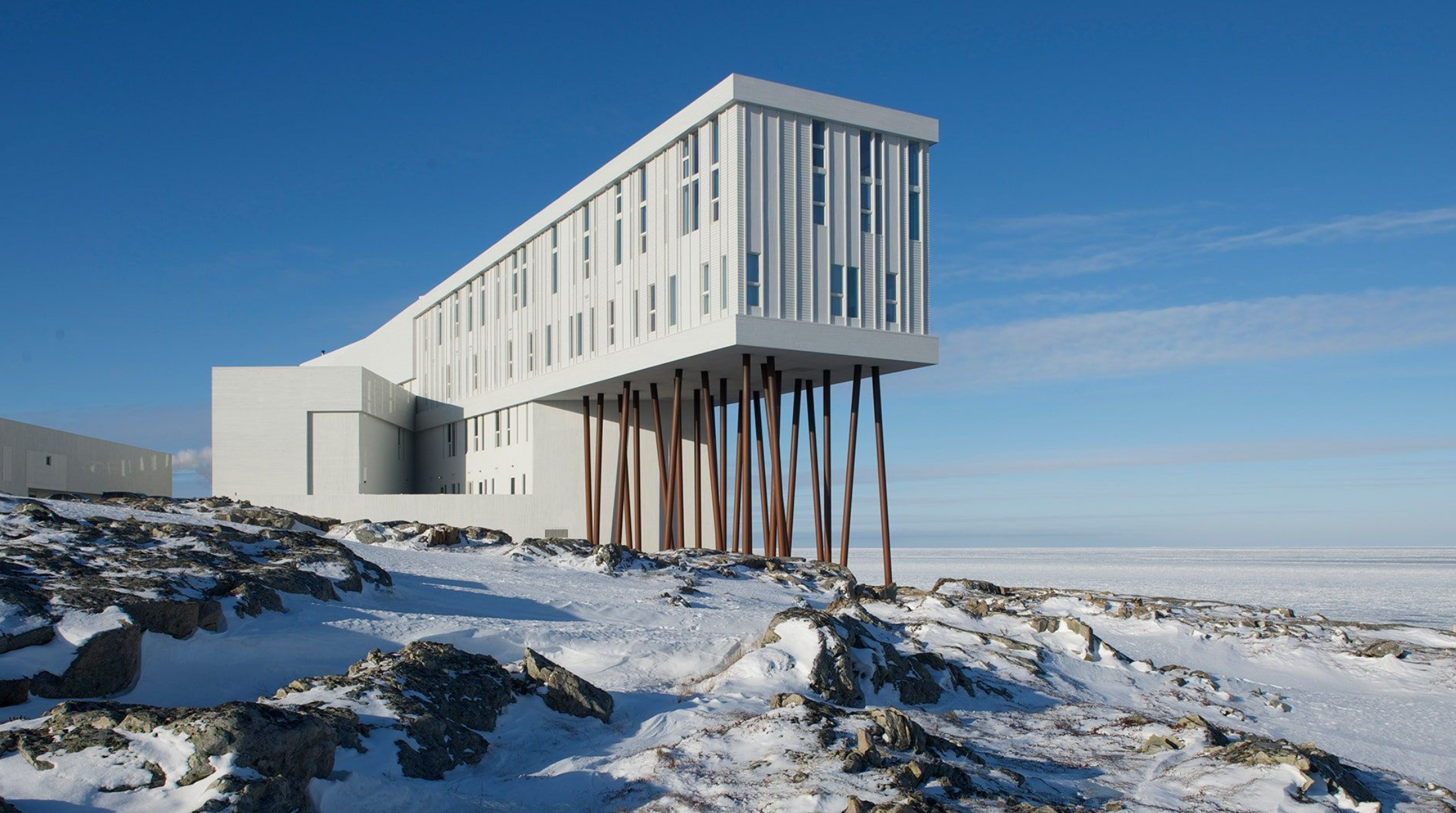
Beyond its architectural design, the Fogo Island Inn prioritizes environmental, economic, and social sustainability. The inn embodies its regenerative values, including having fewer rooms to avoid over-tourism, serving local food sources through traditional fishing practices, and using energy-efficient systems to reduce its environmental footprint (Toby 2022). Additional profits are reinvested into the local economy, including artisan crafts, community initiatives, and heritage preservation (Toby 2022). The Shorefast Foundation also has programs that support local history and traditional ways of knowing. More fishermen have come back to the island and are thriving, along with artisans and boat builders who continue to have work (Toby 2022).
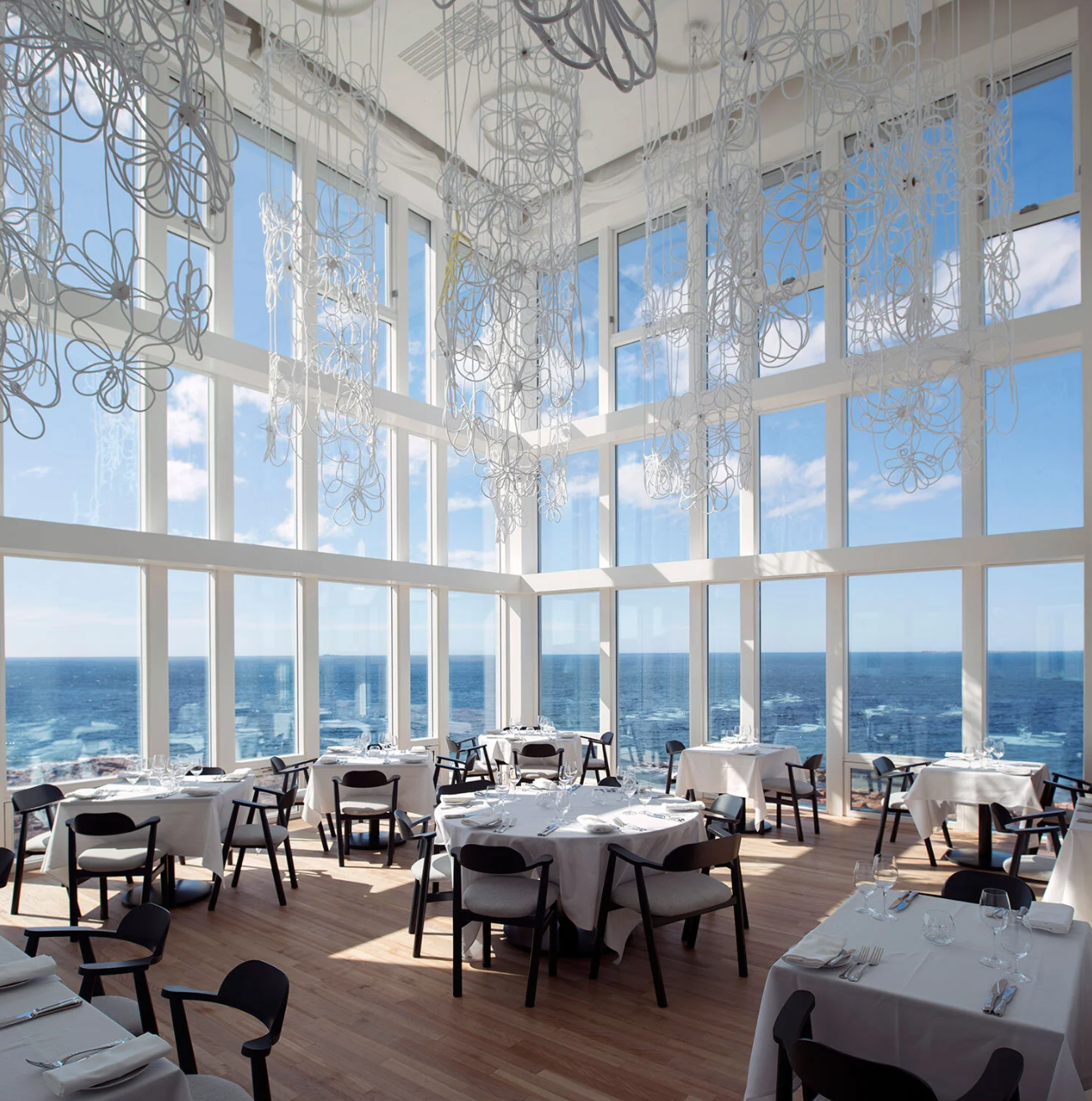
The Fogo Island Inn can be understood as part of Newfoundland’s longer history of adapting architecture to local conditions. In Newfoundland Modern, Robert Mellin explains that architects in the province often had to work within limitations, including materials, location, and local building practices, noting that they “had to make do with fairly rudimentary local construction capabilities” (Mellin 2011). As a result, construction was more experimental, and architecture was shaped by what was actually possible on the ground. The Fogo Island Inn continues this approach. Although it is a contemporary project, it relies on local materials, traditional forms, and responds to the economic realities of the island by reinvesting profits. This way of building connects directly to the theme Great Prairies, Lordly Rivers, which emphasizes how Canadian architecture is shaped by its environment. Architecture is “fabricated within place,” meaning it develops through a relationship with the land, culture, and history around it (Liscombe 2011).
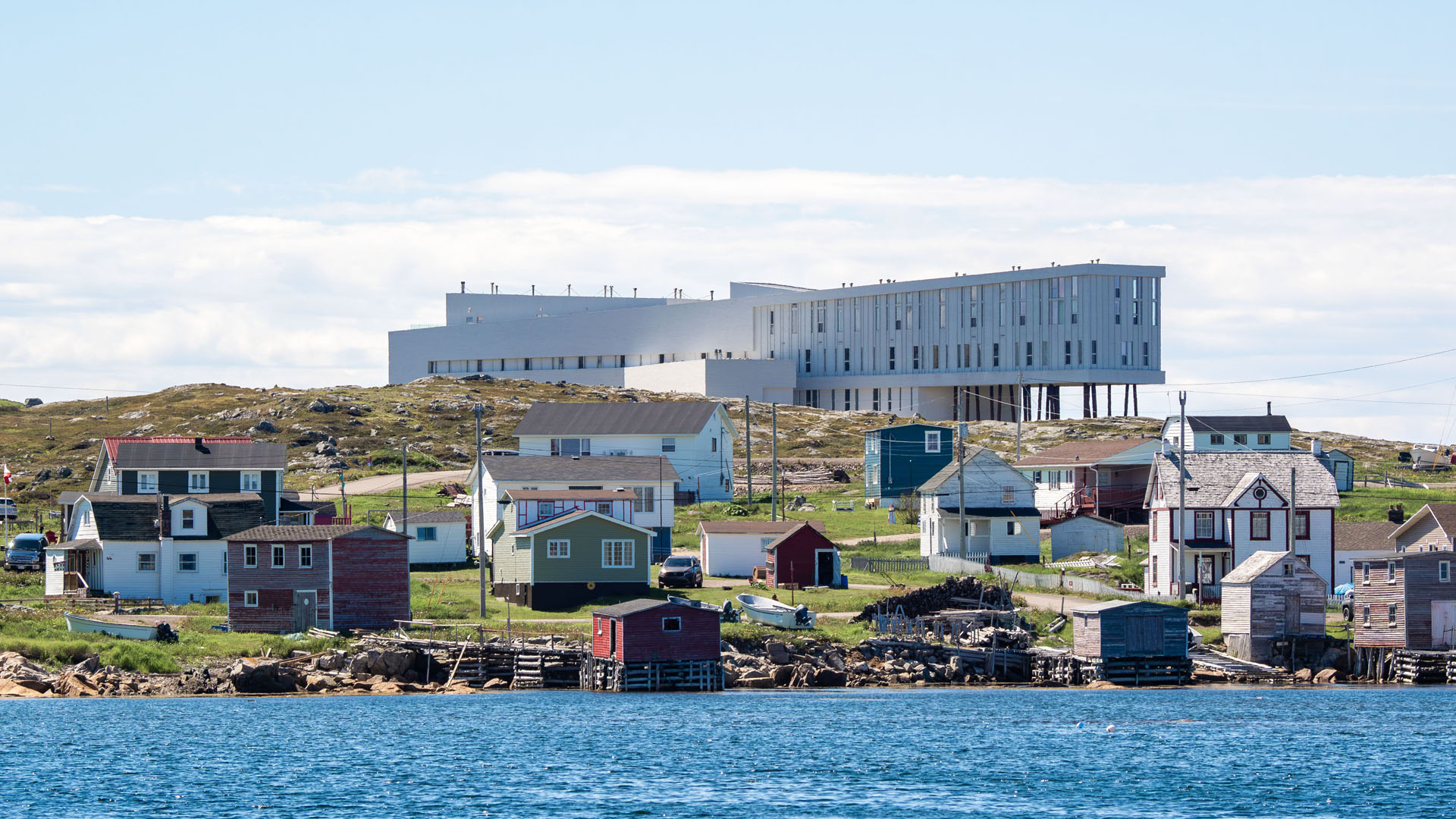
The Fogo Island Inn represents more than a single architectural project. It highlights an attempt to rethink how architecture can contribute to community resilience and regeneration by considering the environment and cultural traditions that the region is based around.
References
Mellin, Robert. 2011. Newfoundland Modern: Architecture in the Smallwood Years, 1949-1972. Canada: McGill-Queen's University Press.
Sealy, Peter. 2013. “At the end of the Earth - Domus.” DOMUS.
https://www.domusweb.it/en/architecture/2013/05/8/at_the_end_of_theearth.html.
Toby, Jennifer. 2022. “Community Regeneration on Fogo Island – Sustainable Heritage Case Studies.” Sustainable Heritage Case Studies.
https://sustainableheritagecasestudies.ca/2022/01/14/community-led-tourism-at-fogo-isl nd/
Liscombe, Rhodri Windsor, ed. 2011. Architecture and the Canadian Fabric. Vancouver: University of British Columbia Press. https://www.ubcpress.ca/asset/9503/1/9780774819398.pdf