This content was created by Anonymous.
Chicago "Workingman's Cottages"
1 media/KS_HH36_thumb.PNG 2025-10-14T08:58:10+00:00 Anonymous 10 1 Credit: Library of Congress plain 2025-10-14T08:58:10+00:00 AnonymousThis page is referenced by:
-
1
media/87fa09de23eb4c3573368b3efcea1ed6.jpg
media/KS_HH39.PNG
2025-10-14T01:44:22+00:00
The “Workingman's Cottage”: a Typology
12
plain
2025-11-18T00:31:58+00:00
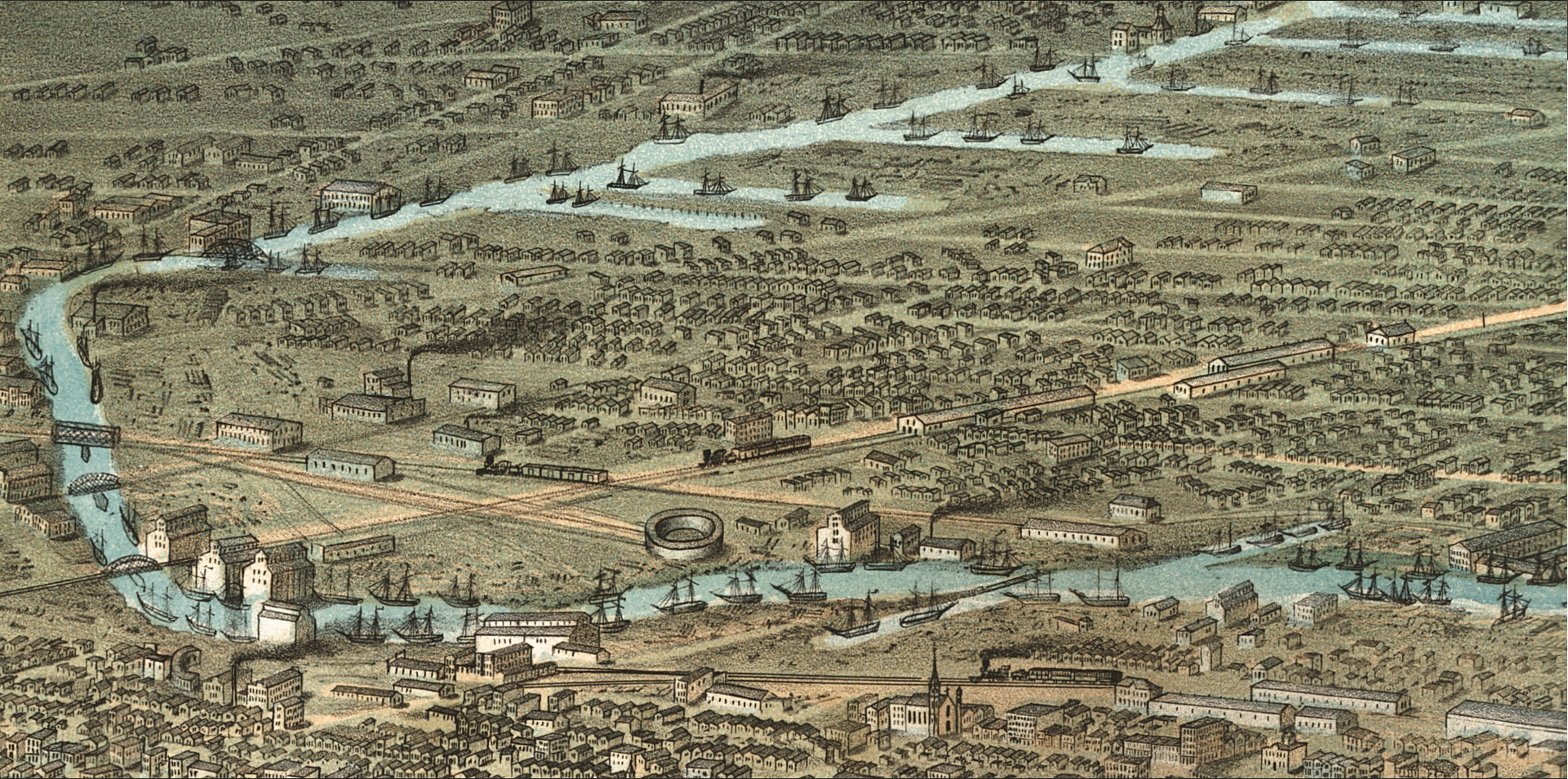
Hintonburg’s worker’s cottages are vernacular, that is, they are buildings without a formal style, but that does not mean that its type does not have any history. In fact, the worker cottage as a type of building is very typical for late 19th urban housing. A 1868 birds eye map of Chicago shows mass crowdings of worker’s cottage’s on the outskirts of the city, crisscrossed by rail and dotted throughout with the belching smoke stacks of industry:
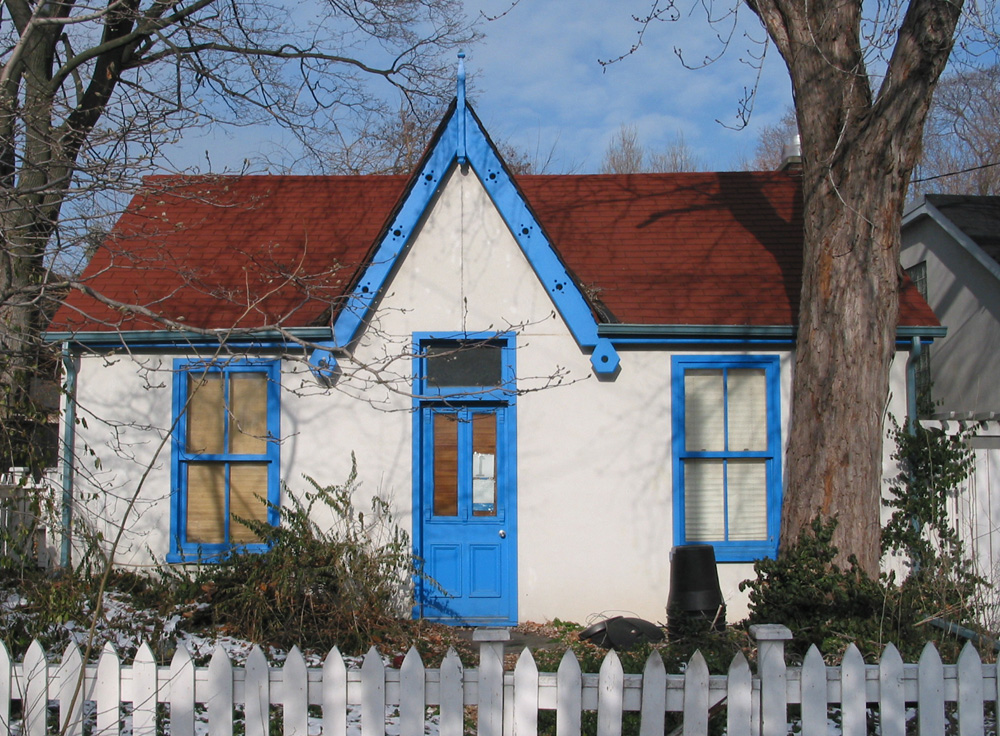
This type of dwelling was in fact ubiquitous in the rapidly industrialising cities and growing suburbs of North America. Toronto’s Cabbagetown neighborhood also shares this kinship with Hintonburg in its tightly packed cottages that still evidence that area's heritage today:
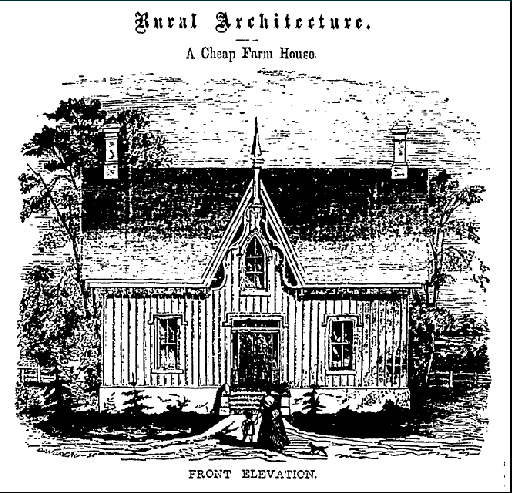
There are obviously differences between the general design. The cottages of Toronto’s Cabbagetown tend to be wider than they are deep, usually stick to one floor, and have a prominent central cross gable roof. Comparatively, Hintonburg cottages tend to be on rather deep lots, with the homes being 1.5/2 stories, and with simpler gable, gambrel, or flat roofs. While the overall look of the so-called “workingman’s cottage” varies by city, they are all united in their housing role and time period, as simple, small, and easily built homes. In fact Toronto’s cottages are seemingly more typical of period Ontario designs (that seem to feature prominently the central cross gable roof), which stemmed from house pattern books, such as A.J. Downing’s: Cottage Residences, Or, a Series of Designs for Rural Cottages and Cottage Villas, and Their Gardens and Grounds: Adapted to North America. That the designs in Downing’s book are billed as “farmers houses” (complete with his extensive notes on which flowers one should use to landscape the site), doesn't matter, or, didn't matter to those workers building their own urban cottage.
Uniformity of design equaled security of design, that is, if your neighbor's design works, why deviate and take a risk. Uniformity was something a pattern book could ensure. Many workers drawn in from the countryside through industrialization would also be familiar with the rural cottage layout, and see it as an aspirational type to own.
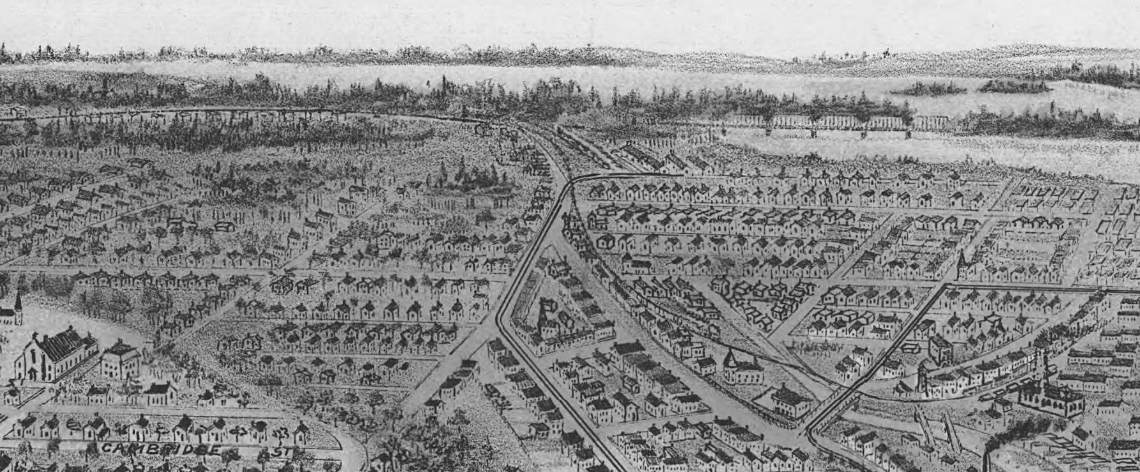
A 1895 birds eye view map of Ottawa from the Toronto Lithographing Company shows the spawning outskirts of new suburbs. While the map is an artistic rendering and not accurate to the level of individual houses, the section below (like Chicago) shows the land dotted with workers' cottages interspersed among empty lots that will soon be filled. The bridge pictured is the Prince of Wales Railway Bridge, which allows us to locate Hintonburg just out of the map's focus, with Mechanicsville and Lebreton Flats here in frame. Surrounding the bridge is the lumber yard of George Mason and Sons, and we can see the railway winding its way towards Hintonburg.