This page was created by Anonymous.
People and Places
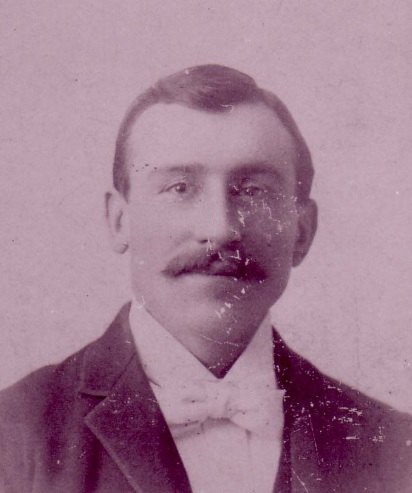
11 Hilda was the home of wood dealer Ruggles Herbert Birtch, who married Louisa Bradley in 1894. He made a good trade selling both firewood and hewn lumber for building in the area.
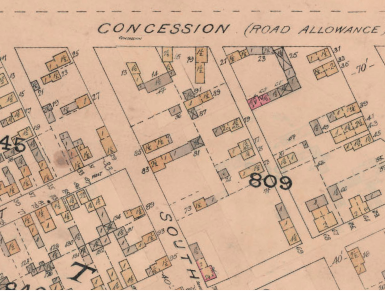
The 1896 fire that would rip through Hilda Street, spared Ruggles house, and luckily a fire insurance plan from the previous year allows us to reconstruct the homes. In 1895 only eight homes faced onto hilda:
Despite the newspaper article claiming that all homes on this block were of plank construction, and reduced to ash by the flame, we can see that Ruggles home was of brick construction, denoted by its pink color. Ruggles clearly had the economic standing to afford a brick house, and the better fireproofing that came with it. A series of stables and shacks connected Ruggle’s home at 11 Hilda to 1 Hilda. Most of the area houses had shacks in the back of the property, donated by the color grey, which were usually outhouses, summer kitchens, small livestock pens (primarily chickens or goats and sheep), or in the case of Ruggles, a place to store his wares. Many also kept small stables for when they needed to travel by horse. An ice house, a shed dug partly into the ground, allowed ice to be stored year round and meat to be saved before the advent of refrigeration. The plentiful availability of local lumber also allowed wooden sidewalks down Hilda Street. Its possible to image Hilda in these early days looking not unlike the pooper working class areas of Toronto that Group of Seven artist Lauren Harris captured, slightly later in the 1920s:
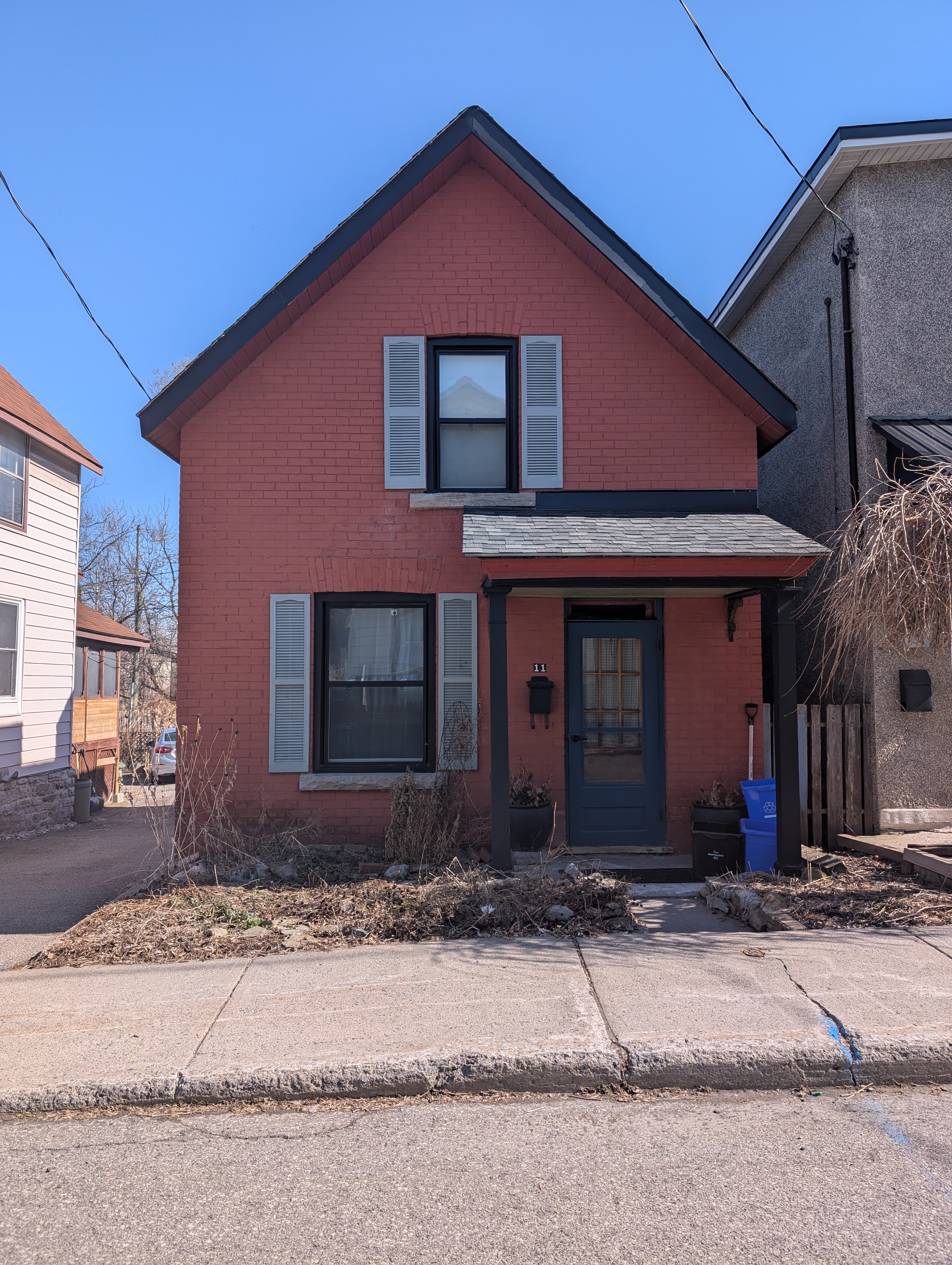
Above is the home of Ruggles Birtch today. We can only imagine today the extensive backlot and sheds that once also occupied the property, which are evidenced by fire insurance plans and in the paintings of similar homes in other cities, like those of Harris.