This content was created by Anonymous.
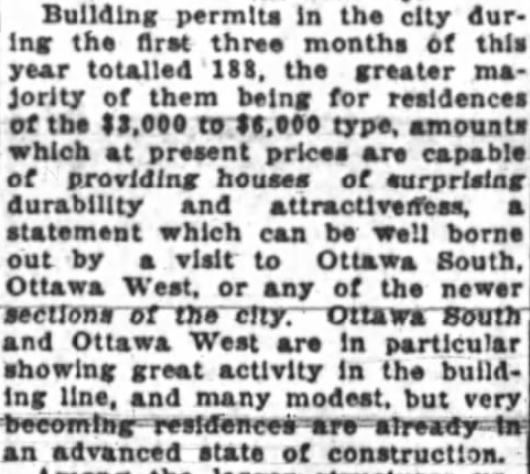
Period paper stressing moderate homes in the area
1 media/KS_HH22_thumb.PNG 2025-10-14T06:03:53+00:00 Anonymous 10 1 Credit: Ottawa Journal plain 2025-10-14T06:03:53+00:00 AnonymousThis page is referenced by:
-
1
media/87fa09de23eb4c3573368b3efcea1ed6.jpg
2025-10-14T05:33:40+00:00
Manchesterville: the Origins of a Working Class Suburb III
23
plain
2025-11-23T19:30:04+00:00
The subdivision lots of Armstrong's land were larger than today's parcels. This was in keeping with period practice of offering large lots to developers or prospective homeowners who would then further subdivide. Houses at this time were generally not built speculatively, that is, where a developer builds a house (or series of homes) which he then puts on the market (hence speculating on their market appeal). As was done here in Hintonburg’s oldest quadrant, developers would simply purchase the larger lots and then decide on a general layout of parcels. More often than not, prospective homeowners would buy parcels directly and build their own house overtime in chunks as they could afford. Those who were more affluent could afford the services of a dedicated homebuilder. Judge Armstrong’s subdivision, “plan 57”, stayed vacant for nearly 10 years following his death until it was purchased by developer David Manchester. Manchester purchased the lots for $50 a piece from Armstrong's widow, Mary Ann Armstrong, over 1883 and 1884.
Ottawa's First Subdivision:
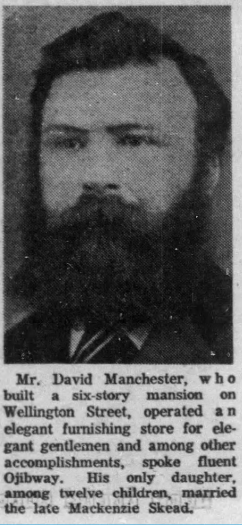
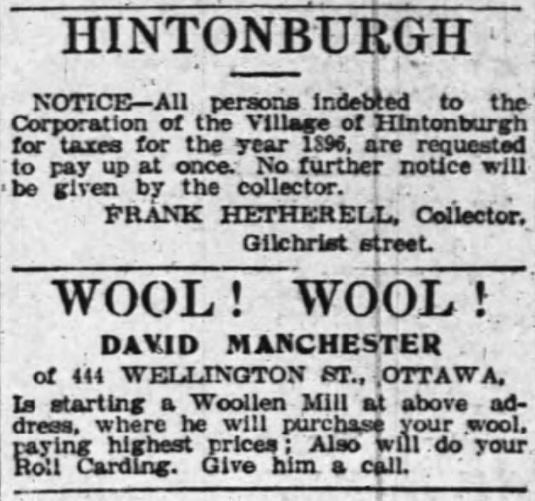
Manchester was an Ottawa wool Merchant who ran a very successful tailoring business on Wellington Street (in the area of today's Garden of the Provinces and Territories).
Originally born in Montreal, he was a staunch Methodist and also a polyglot having expert knowledge of French and Ojibwe, gained from operating Northern Ontario lumber camps.
In a period before large scale economic regulation, and with the boom and bust nature of Ottawa’s seasonal lumber industry, property and land investments were considered a safe choice. As industrialization drew in workers from the countryside as well as immigrants, businessmen like Manchester turned developers - knowing that those very workers they employed would need housing. There was also the factor that “the choice to invest in the local community could only add to its stability.” This was not only incredibly lucrative though, as land development often mixed with social causes during this period, those societal issues which had been made acute through industrialization. Indeed, as we shall see, period social mores influenced Manchester’s plan for what would become (although briefly) Manchesterville.
Interestingly Manchester can claim to have built the first skyscraper in Ottawa:“Dominating the entire neighborhood, was the six story mansion of Mr. David Manchester; a brick house that belonged to the skyscraper class at the time. Six Stories were remarkable enough for an office building, but for a residence!”
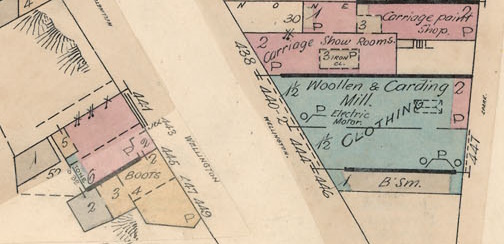
Originally living above his wool mill, the Manchester family moved across the street in 1888 to the very tall but thin structure. It's strange today to think of a six story building as a “skyscraper,” but such a first in Ottawa evidences Manchester's progressive nature.
Period fire insurance places from 1895 are the only pictorial evidence of this building that remains. The blue building (blue representing stone construction) here is Manchester’s Mill, listed at 1.5 stories, while the red building (denoting brick) across the street is labelled six:
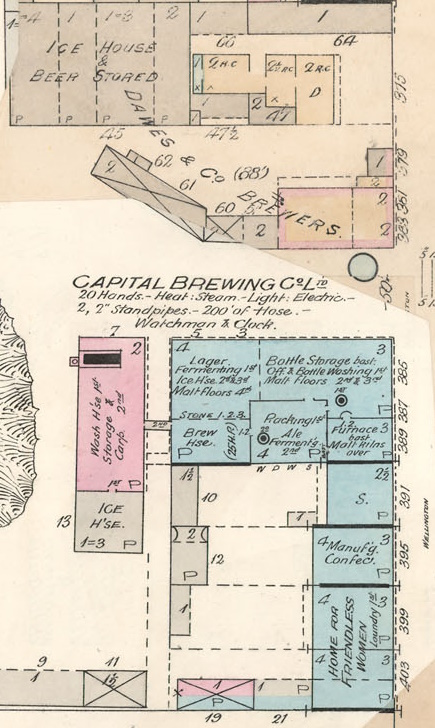
Adjacent to his wool mill was Brading's Brewery, as well as other area brewers.
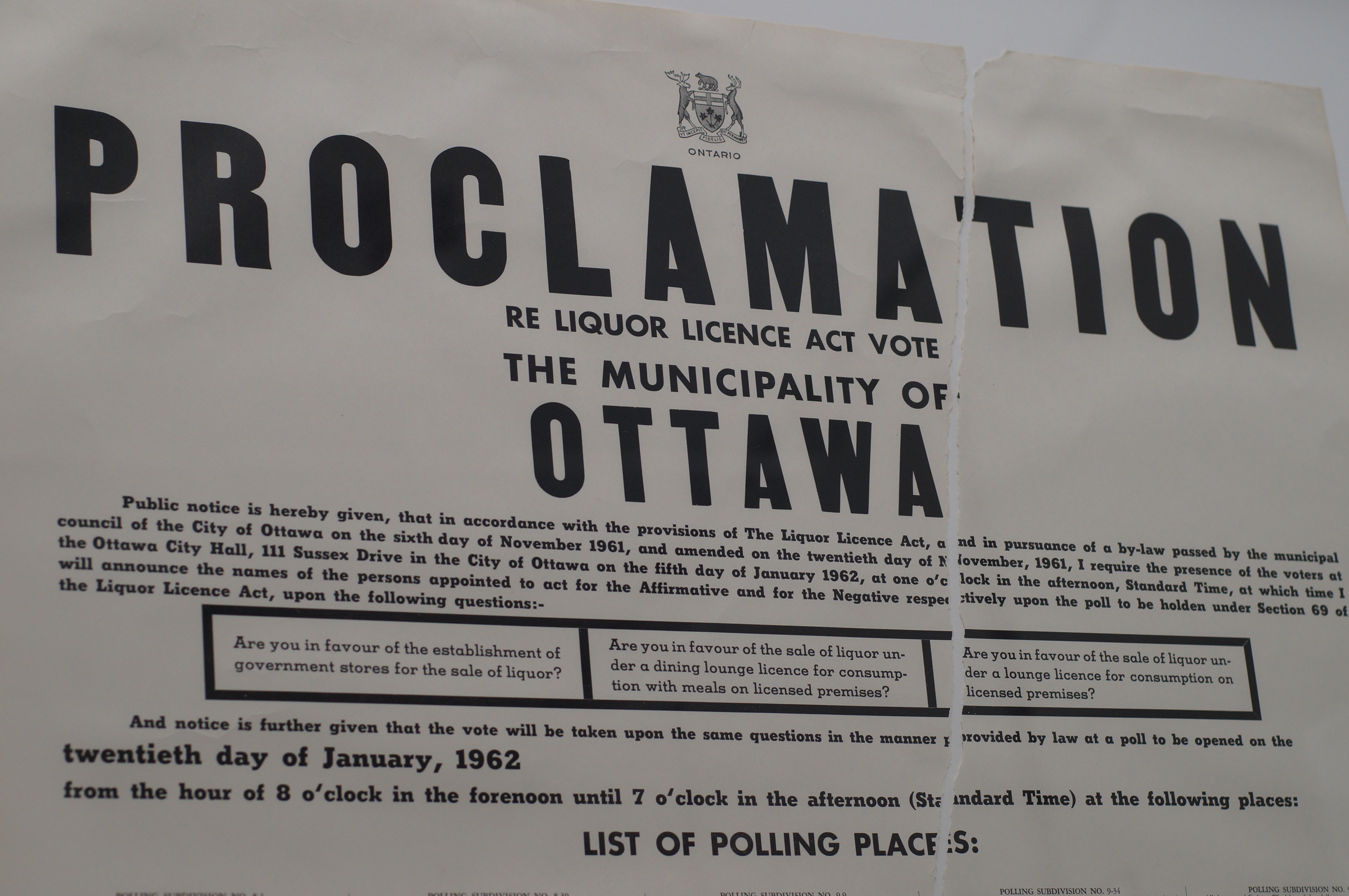
Manchester was livid when his daughter (the only girl of his 12 children) was caught playing with the brewers children, as he considered brewers to be immoral in cashing in on society's worst vices. He was so zealous in this belief that, as one newspaper article put it, he forbade his daughter to even look in the brewery's direction, and would not so much as speak to Mr. Branding. Manchester was a devout member of the temperance movement, a largely protestant movement which stressed abstinence from alcohol. He was also a speaker at prohibition meetings in Hull, where he argued in favor of legislation against alcohol. In 1878 the Scott Act had moved the issue of prohibition to municipal governments, which held public vote on whether they wanted to be “dry” or “wet.”
In this light it’s easy to see how Manchester fits within the historically recognized “social gospel movement,” a progressive set of period beliefs that god acted for social change, and that Christian doctrine could/should be applied to sociological issues (social issues like temperance). The heyday of the social gospel movement, like that of prohibition, was from the late 1880’s to the 1930’s, and also drew on protestant evangelism in stressing personal commitment to piety. The movement would serve as a backdrop for later social reformers, like NDP founder Tommy Douglas. Unlike evangelism, the proponents of the social gospel accepted a progressive political and philosophical liberalism - argued by the likes of English philosopher John Stuart Mill -, as well tenets of Darwinism. From Mill’s liberalism they took a progressive view of free speech, suffrage for the working class, expanded women's rights, and the establishment of labor organisations. From the social Darwinists, they took the idea that the theory of evolution could be applied to social class and that, with a little fudging, those worse off in society could be helped by their betters. Alcohol was just one such issue (temperance being a progressive movement), but social reformers would apply this thinking to the built environment as well.
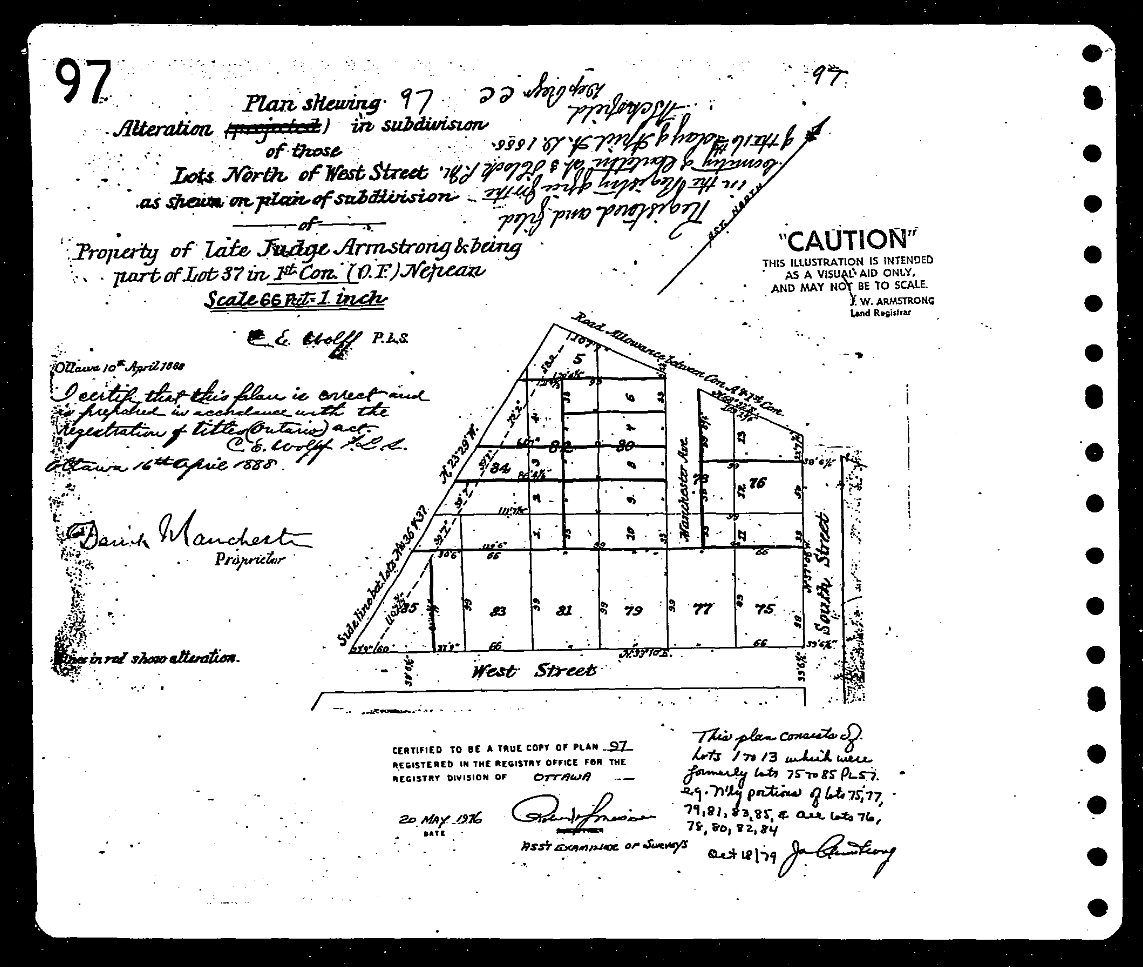
Manchester further subdivided Judge Armstrong’s lots, and period land registry records list him as “proprietor” of the parcels of the “late Judge Armstrong.” They also ascribe the planning of the area to him through his contracts with buyers. Today’s property lines follow Manchester’s original plan, like here on his subdivision plan 97, the area between Garland (South), Merton, and Lowery (west) streets:
From this plan you can see that dividing down the lots would have created excess space in the center of the block, because of its trapezoidal shape. Manchester fixed this by building the extremely short Manchester Avenue, which is the only surviving named evidence of David Manchester in Hintonburg today.
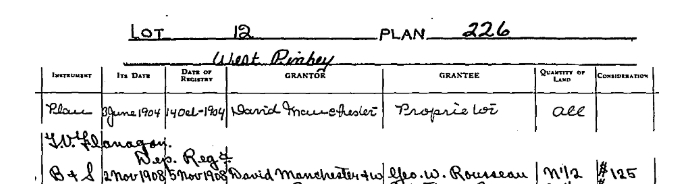
Manchester sold his first subdivided lots in 1888 to prospective working class homeowners, but would go a step further in helping them establish themselves in the area under his progressive nature. He sold lots to buyers at a very reasonable rate, and would then assist through a personal line of credit in building the homes. He continued selling his lots in eastern Hintonburg until the early 1920s, by which time he was already in his 80s. He charged anywhere from $60-125 (around $1,500-3,500 today) for his lots between Bayview and Piney:
As mentioned, most homes were built piecemeal, with the cladding, outbuildings, and amenities added as workers could afford then - so no doubt Mancherter’s lenient line of credit was welcome. He gave the workers as long as 10 years to pay back their loans to him. The average cost of building a workers cottage in the area was around $1,400 (roughly $40,000 today, a steal!) With this in mind It could be argued that the titular workers cottage, synonymous with Hintonburg’s heritage, can be owned to one man: David Manchester, and his beneficence of local workers.
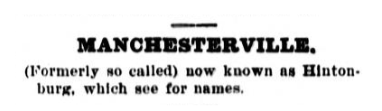
During the late 19th century the area was briefly referred to as Manchesterville, and was listed as a separate suburb in City directories.
Already by 1895, the name Manchesterville was clearly losing traction, and was soon delisted from directories. It’s likely that this was because the area could not be economically self-sufficient from the rest of Hintonburg, and thus became further integrated into the larger community that was developing.
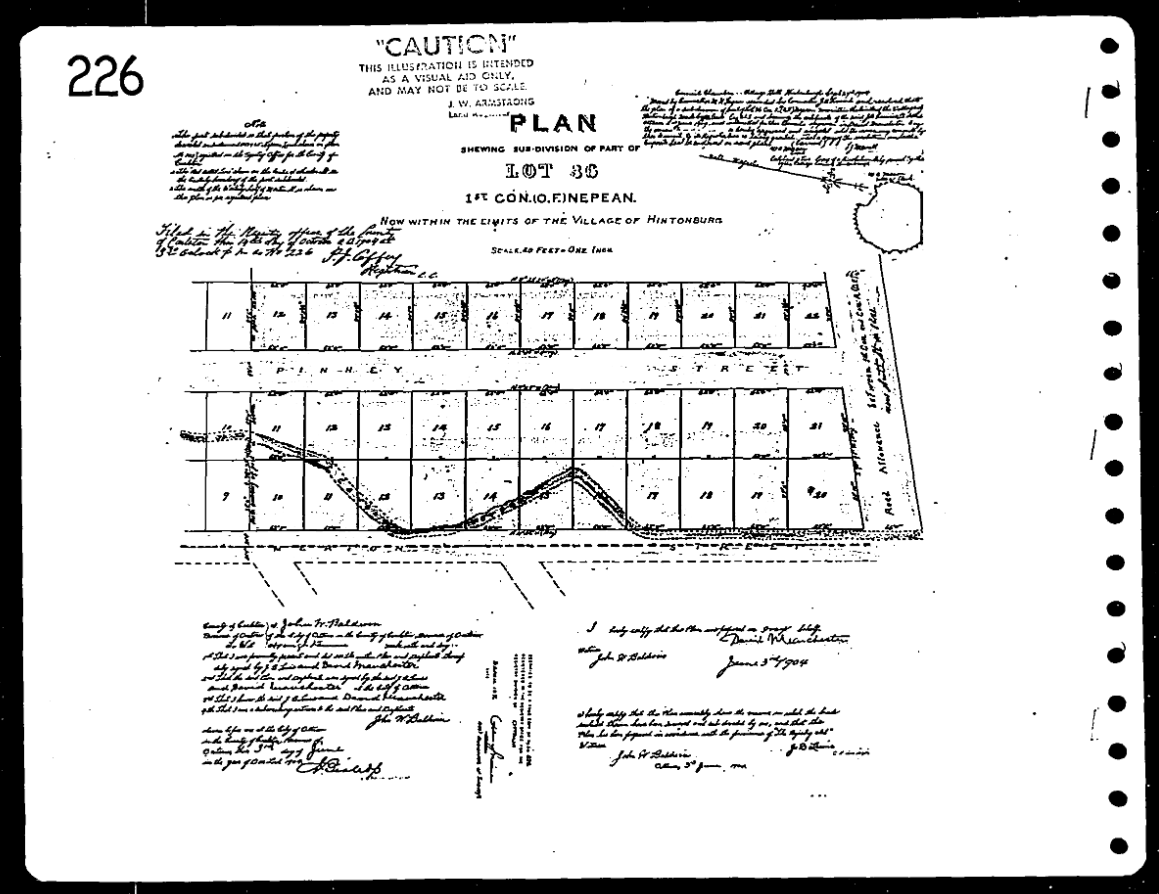
By 1904 Manchester had finished subdividing the land along Merton and Pinhey Street, which took time given the clearing of areas of swampy land and a creek:
Manchester continued to sell land in this area right up until his death in 1925, and modest cottages continued to be built. Demand for these houses continued into the 1920s because as one Ottawa journal column put it “What Ottawa needs is more houses and still more houses of average size and of modest value.” Even then the Ottawa Journal’s homebuilding page, still stressed wood as a material that balanced aesthetic appeal, cost, and both ease and speed in modest home construction.
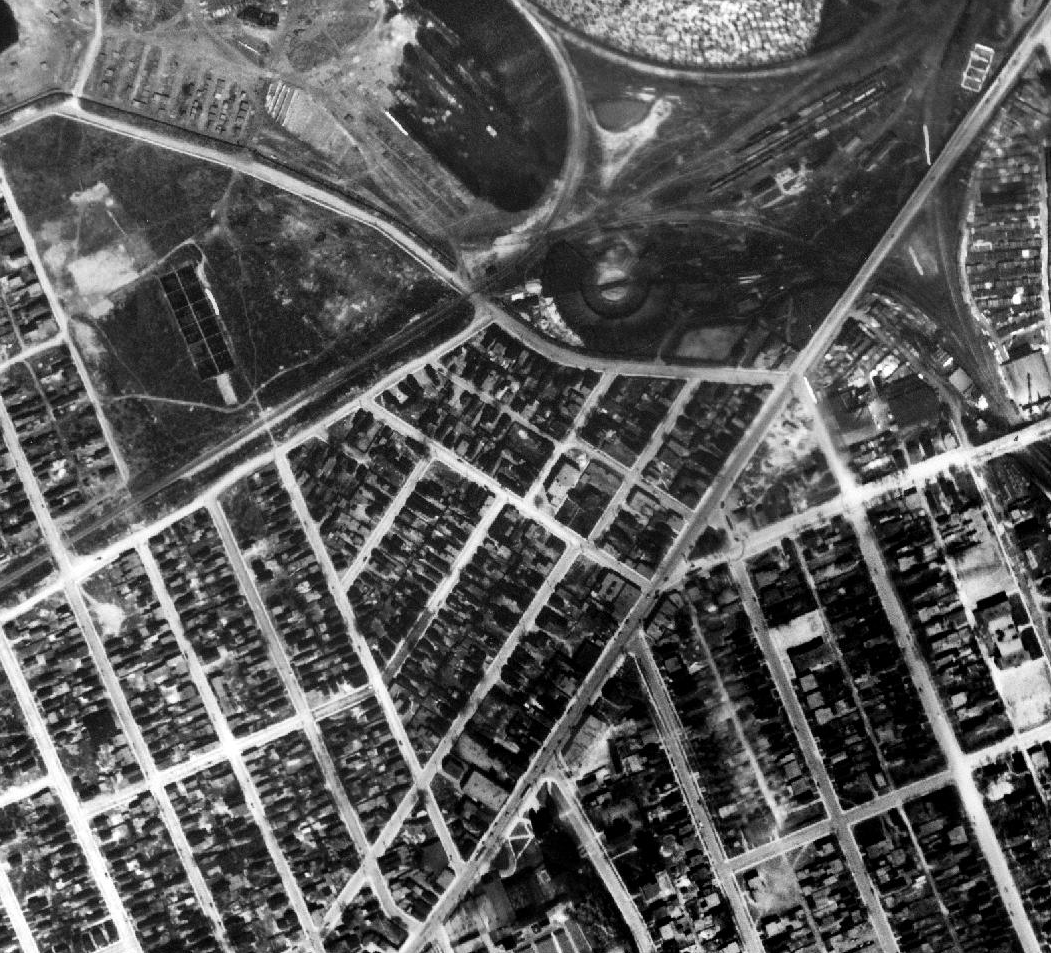
By 1928, just three years after Manchester’s death, the area was nearly completely developed: