Building for Labor: Hintonburg’s Plank and Frame CottagesMain MenuPrefaceIntroductionManchesterville: the Origins of a Working Class SuburbSocial Forces and the City Beautiful MovementThe “Workingman's Cottage”: a TypologyBuilding Techniques of the Worker’s Cottage: Plank Frame ConstructionBuilding Techniques of the Worker’s Cottage: Plank Frame Construction IIPeople and PlacesFurther Reading
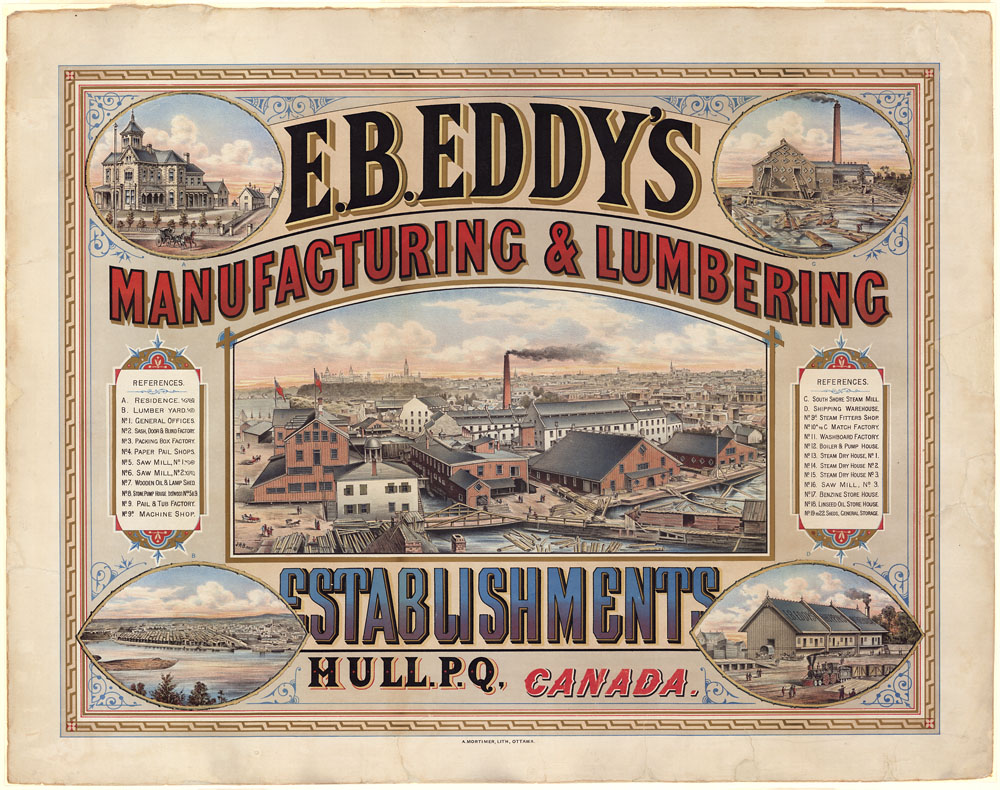
The E.B. Eddy Mill at the Chaudiere in 1888- one the two large mills, the other being that of “lumber baron” J.R. Booths.
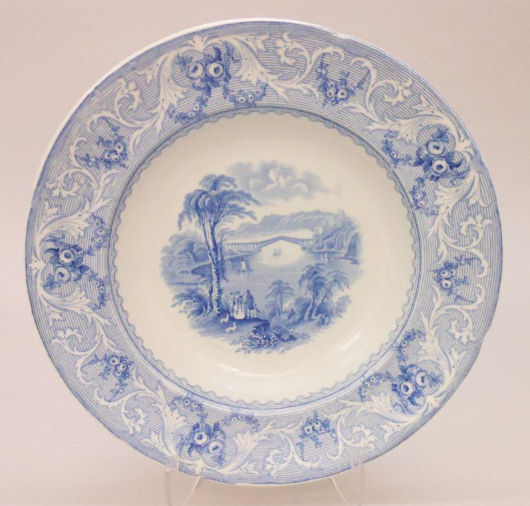
In 1845 Judge Armstrong, the son of Anglo-Irish emigres purchased land between Merton, Scott Street, and Little Chaudiere Road (today's Bayview) from the Sparks family, in what would become the oldest densely built area of Hintonburg. He would build his house, a picturesque English Georgian estate, “the surroundings of which... must have been very attractive as they swept down the shores of the Ottawa River, Lazy Bay, and the Chaudiere islands.” Quebec tableware from the late 1800s evidences the idyllic natural beauty of the Chaudiere site, that no doubt drew in Armstrong: Despite its picturesque and bucolic nature, Armstrong's estate now had an excellent view of the by now booming lumber industries at Le-Breton Flats and on the Chaudiere: